¶ Steve Baer Zome House — Photo Gallery
Photographs of Steve Baer's personal zome home in Corrales, New Mexico. The house is one of the most significant examples of passive solar design in the American Southwest, integrating drum walls for thermal mass, Skylid® insulated louvers, and a distinctive geodesic roof structure. Photos are circa 2009, contemporary with the AIA Albuquerque presentation.
¶ Roof — Geodesic Structure with Aluminum Panels
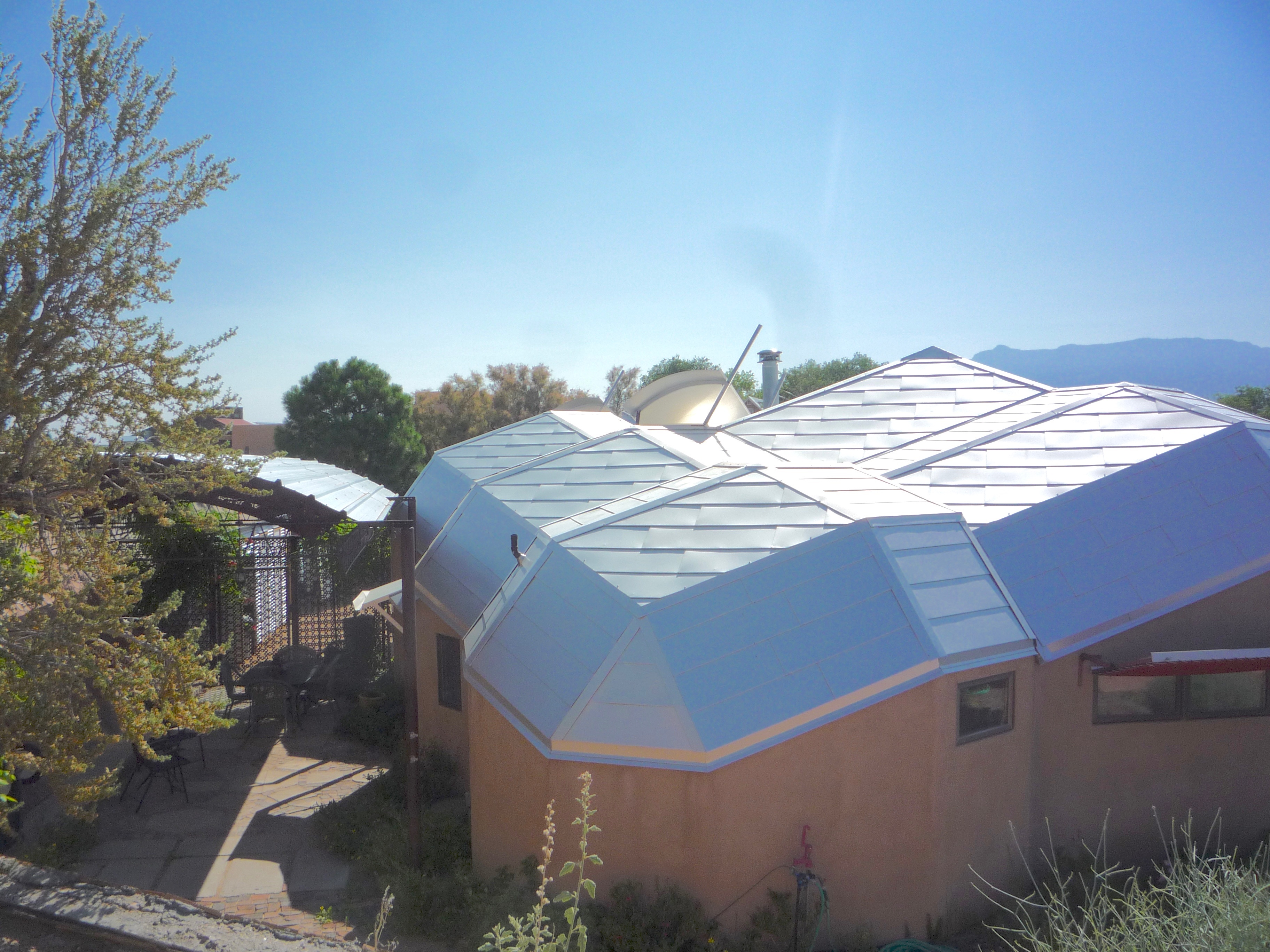
The characteristic triangulated aluminum roof panels of Baer's zome structure. Multiple zome units are connected together. The Sandia Mountains are visible in the background, placing this firmly in the Corrales/Albuquerque area. The panel geometry is both structural and functional — the faceted surfaces shed water and snow while providing south-facing exposure for passive gain.
¶ Interior — Drum Wall and Living Space
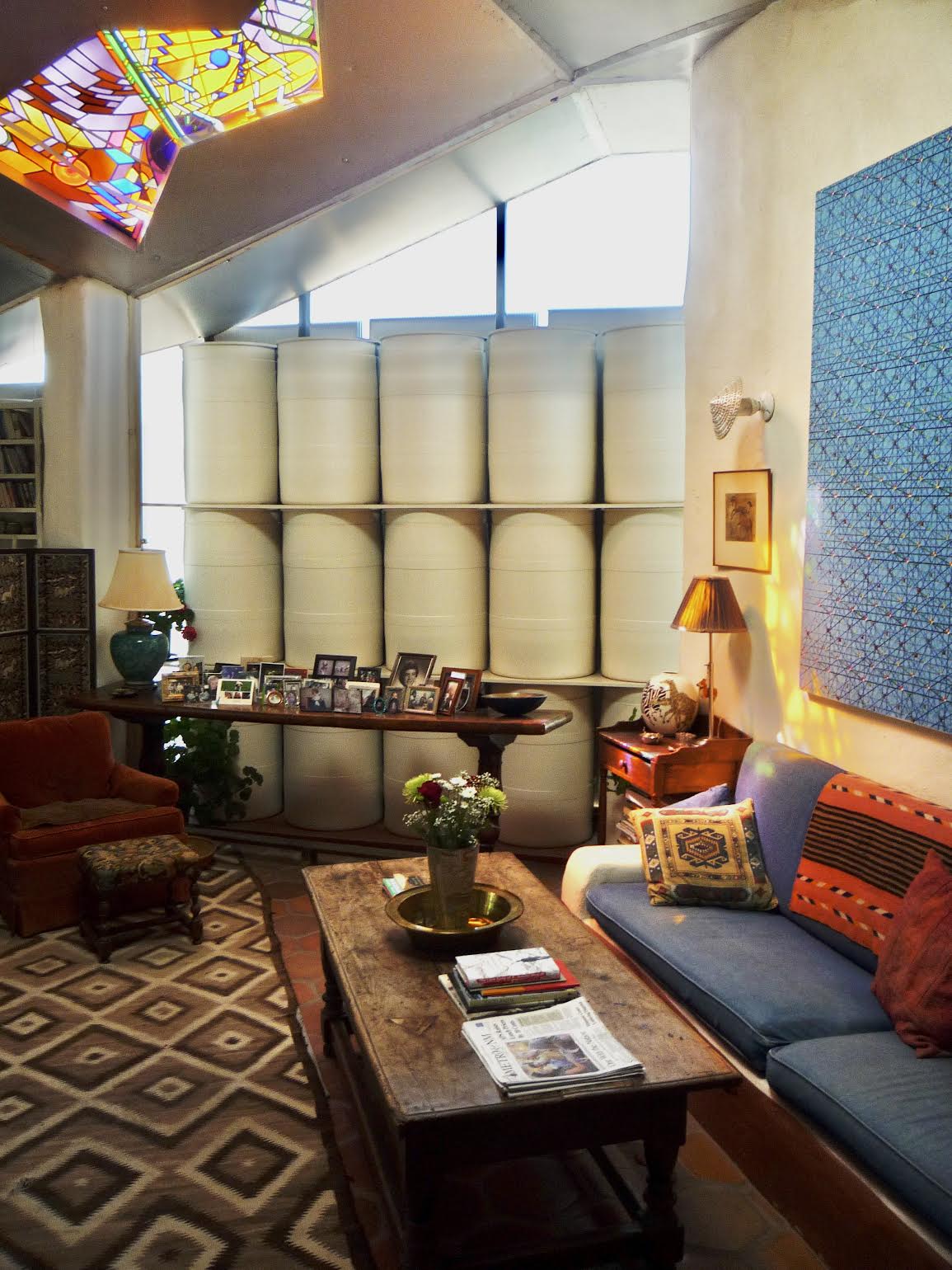
The interior drum wall — the defining feature of Baer's home. White plastic drums (replacing the original steel drums, which were updated to plastic around 1991 after the steel developed leaks) are stacked in a grid on the south-facing wall, storing solar heat admitted through the glazing and releasing it slowly overnight. The colorful stained glass panel in the upper left is set into the Skylid skylight opening. The combination of handmade rugs, art, and high-tech thermal mass is characteristic of Drop City-influenced passive solar architecture.
¶ South Facade — Glazing and Thermal Collection
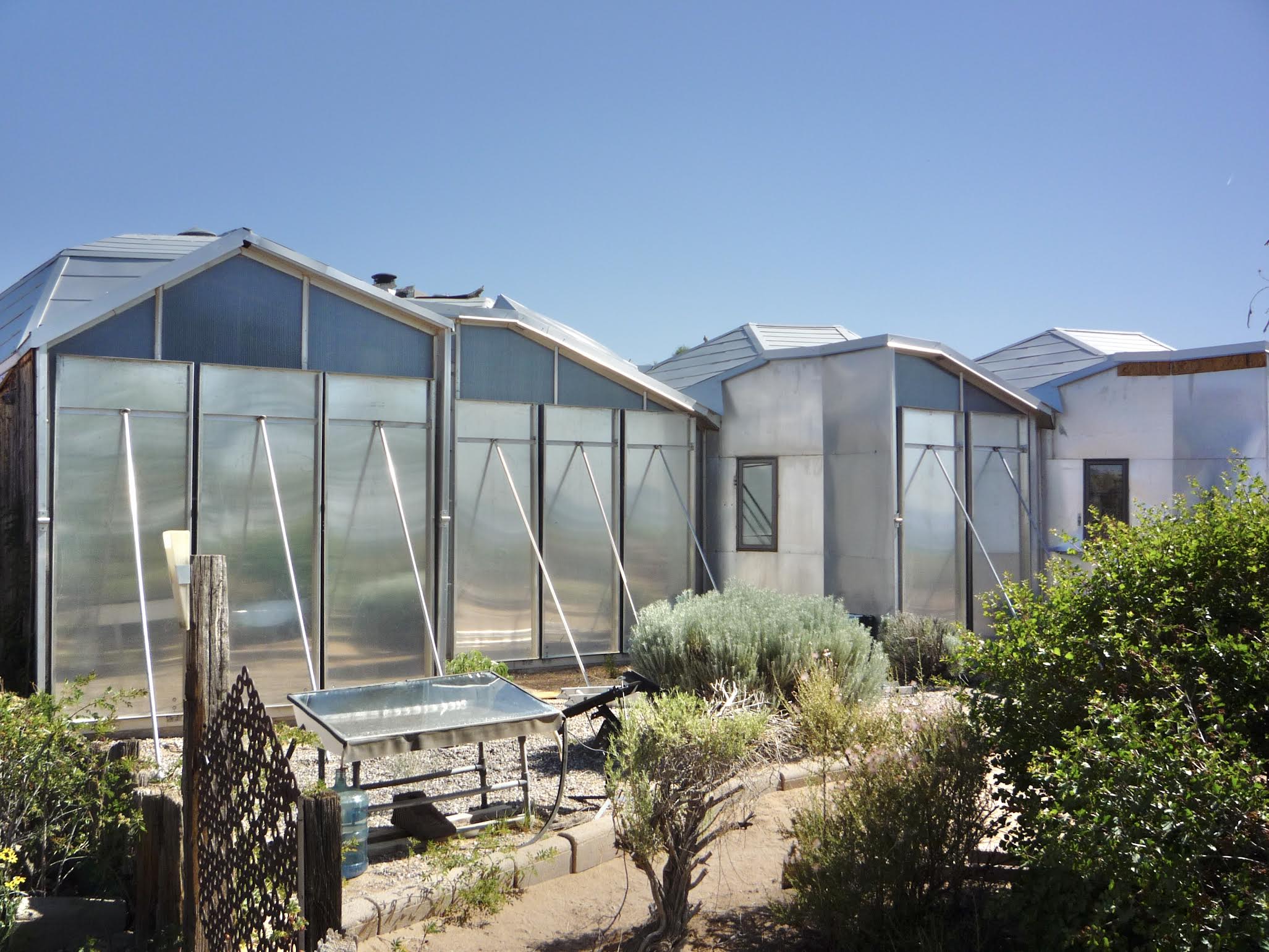
The south-facing glazing on an outbuilding or workshop at the Zomeworks compound. Large polycarbonate panels are propped open with white aluminum support rods — this is the summer/ventilation position. In winter, the panels close against the wall to create a solar collection zone in front of the thermal mass. The arrangement echoes the drum door/shade designs described in the 1970s Tribal Messenger articles.
¶ North View — Weathered Wood and Zome Geometry
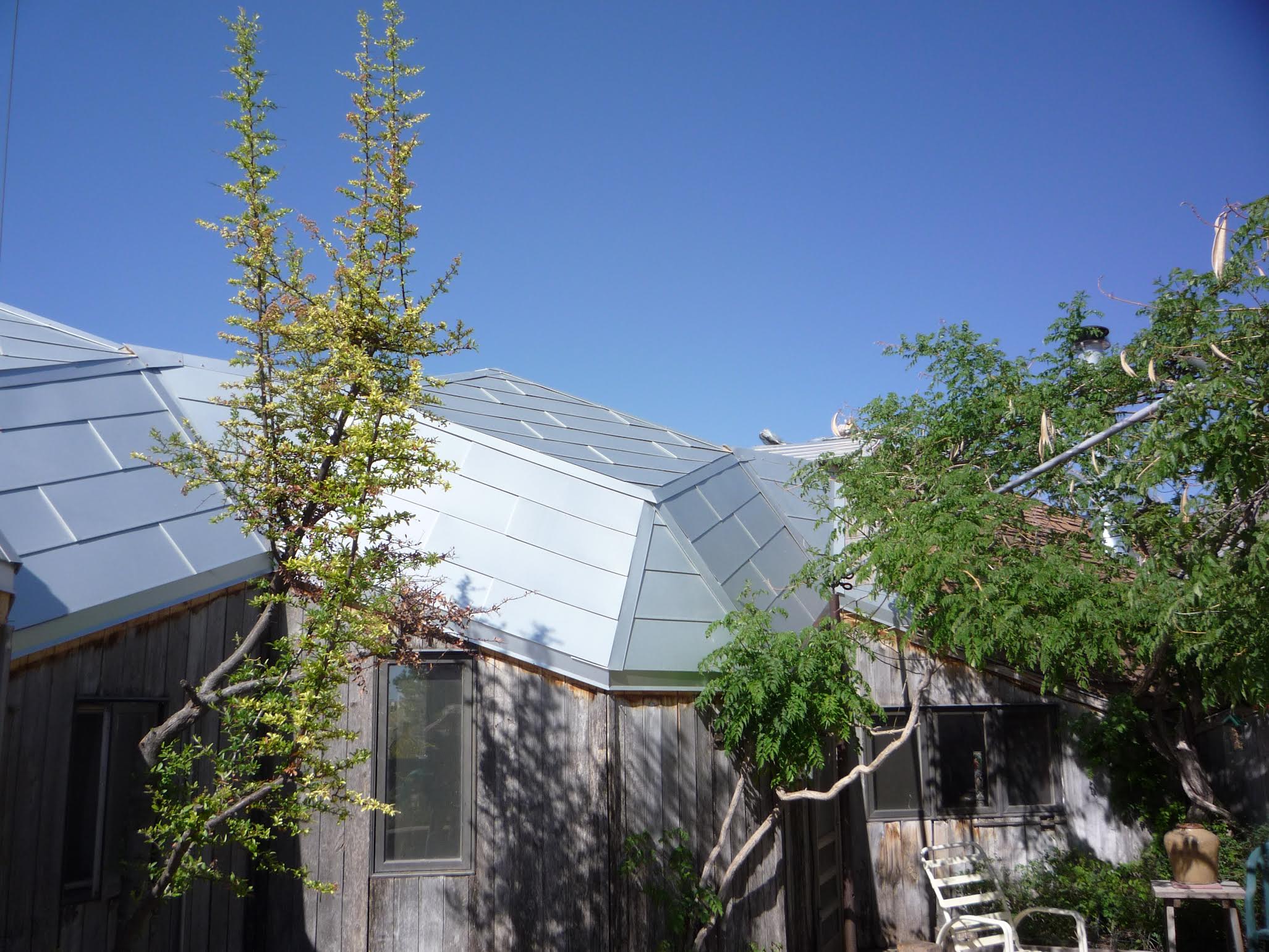
The north side of the zome cluster, showing weathered wood siding and the sharp triangular geometry of the roof. Desert trees (likely cottonwood) frame the foreground. The contrast between the organic weathered wood and the precision-cut aluminum panels is characteristic of Baer's aesthetic — functional geometry grounded in the New Mexico landscape.
¶ Skylid® — Insulated Louvers from Below
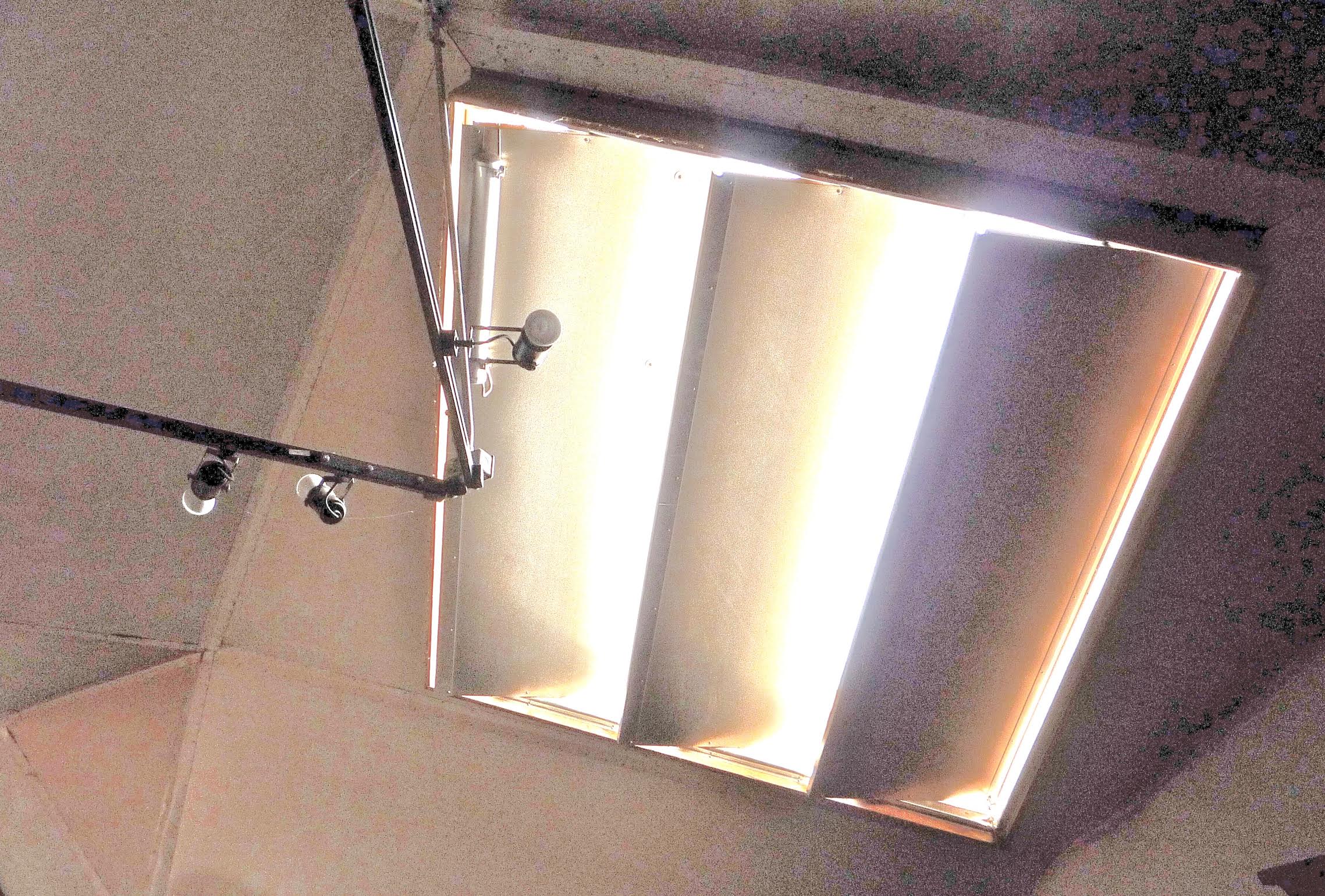
A close-up view of the Zomeworks Skylid® system looking up from inside, louvers open. The Skylid uses bimetallic actuators — small sealed canisters of Freon — to open in the presence of sun and close automatically when it's cold or the sun sets, without any electrical controls. The actuator mechanism is visible at the top of the frame. First developed by Baer in 1973 and still produced by Zomeworks.
¶ Shade/Reflector — South-Facing Outbuilding
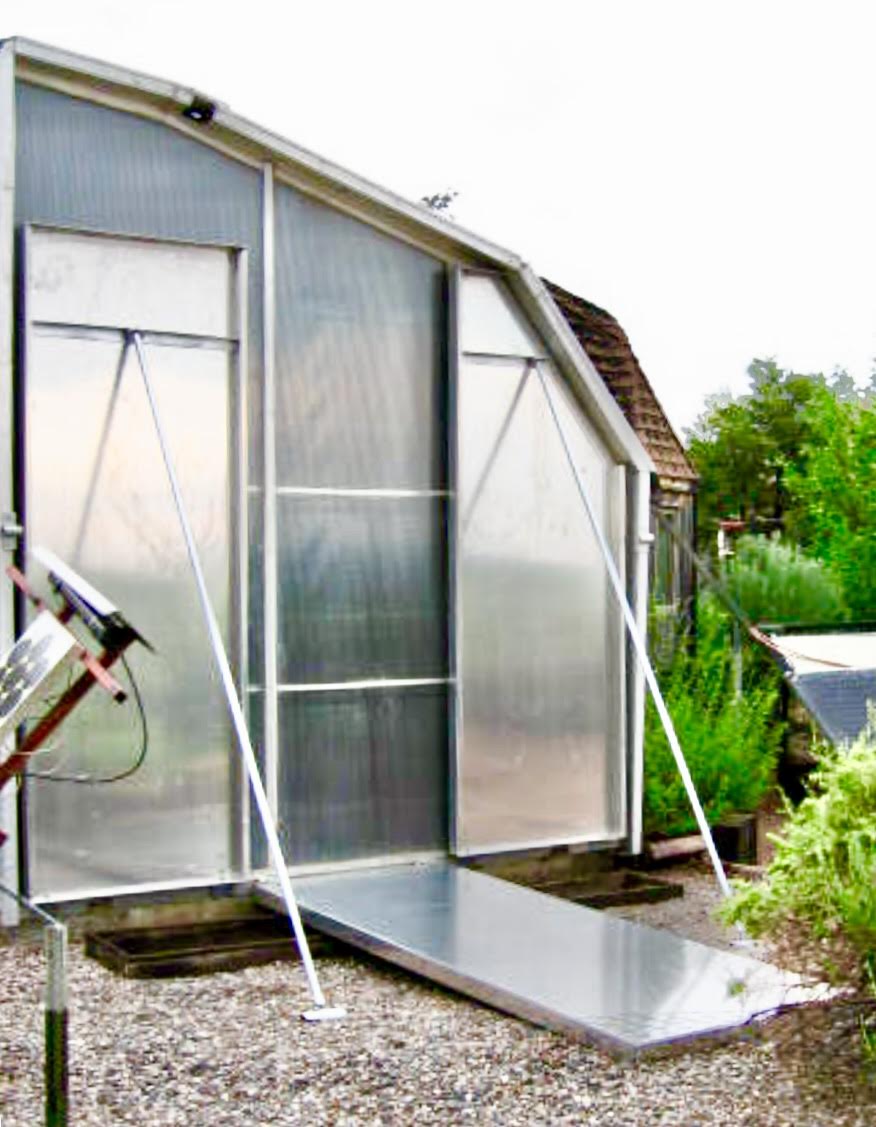
A shade/reflector installation on an outbuilding at the Zomeworks compound — closely related to the Sunbender® design. The south-facing polycarbonate glazing panels are in the open (summer) position, propped out with aluminum rods. The horizontal aluminum reflector panel at the base directs additional sunlight into the interior in winter when deployed upward. This image appears in the 2009 AIA presentation context of demonstrating Sunbender® and shade/reflector variations.
Images: Zomeworks Corporation / Steve Baer, circa 2009. Photographs of the Baer zome home, Corrales, New Mexico.