¶ Di-Thermal Roofs
Zomeworks Corporation as an extension of its Cool Cell™ work has developed Di-thermal roofs to heat and cool buildings. These are unglazed radiator/absorber that collect heat during winter days and dispose of heat summer nights. In some cases the roof both collects and rejects heat during the same 24 hours.
The Di-thermal roof allows one to do all the cooling and most of the heating in many parts of the United States.
The Di-thermal roof can be blow molded plastic, aluminum extrusion with snap in copper pipes or copper roof with copper pipe waterways.
Di-thermal roofs plumb to heat storage tanks and inner radiant heat exchangers that operate with low temperature differences.
To assure the success of Di-thermal systems the comfort of the radiant heating and cooling must be so attractive that customers might choose it for their buildings even if they had to pay high prices for the energy used to run it.
In promoting the Di-thermal roof we are betting that we can make new kinds of radiant heating and cooling systems, new kinds of roofs and find inexpensive tanks for heat storage in water. These three challenges can probably be met. Roofs that effectively collect solar heat and radiate to the night sky should be able to be constructed for the cost of a regular roof plus $3.00 per square foot. Tanks for water storage can be installed at $1.00 per gallon or $3.00 per square foot at a thermal mass of 3 gallons per square foot. The great question is can we make an indoor radiant heating and cooling system that can work in the temperature range of the Di-thermal roof and is so comfortable the public would use them with or without natural solar heat and night sky cooling. I think we can.
Radiant slab heating is very popular yet overhead radiant systems are said to be even more comfortable. Ed Allen discusses floor and ceiling radiant systems in this extensive quote from his book How Buildings Work from Oxford University Press 1995:
We will discuss these last two strategies in greater detail. Schemes for heating floors or ceilings are fairly commonplace, usually employing electric resistance wires, warm air circulating through multiple ducts, or warm water circulating through coils of pipe to warm surfaces of concrete or plaster. (Heating of walls is not usually attempted because we tend to drive nails and screws into walls for hanging pictures and shelves.) Floor systems are attractive because they warm the feet by conduction and set up convection currents that heat the air in the room quite evenly. But they have several limitations: Tables and desks, for example, cast infrared shadows that hamper the ability of the warm floor to heat hands and arms (9.6) Unless a building is well insulated, such systems are incapable of furnishing all the heat required to maintain a comfortable air temperature in a cold climate without operating at surface temperatures that are uncomfortably warm to the feet. Their efficiency is greatly reduced by rugs and carpets. They are incapable, because of the considerable thermal capacity of the floor slab, of reacting quickly to small or sudden changes in the demand for heat inside a building. And if anything goes wrong with heating wires of pipes inside the floor; repair can be messy and expensive.
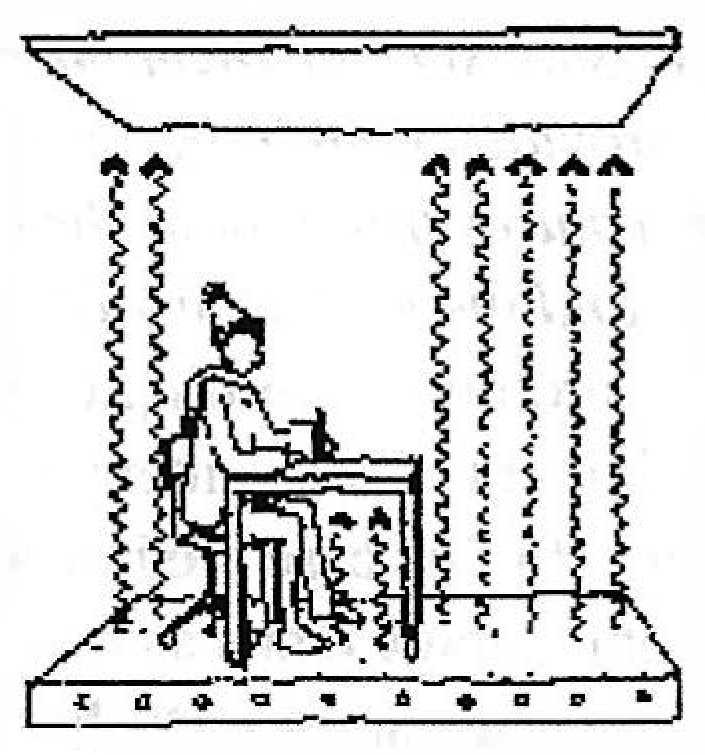
Ceiling systems have few of these problems. They can run at high temperatures because people seldom come in contact with ceilings. Tearing down a plaster ceiling for repairs is much easier than tearing up a concrete floor, and some ceiling heating systems are made up of snap-together metal components allowing for easy maintenance. Ceiling systems can usually react fairly quickly to changing demands for heat, because of their relatively low mass. Downward convection from a warm ceiling is poor, however, leading to lower overall efficiencies and a stratum of cool air at floor level, a defect made worse by the infrared shadows that tables and desks cast on peoples legs and feet (9.7).
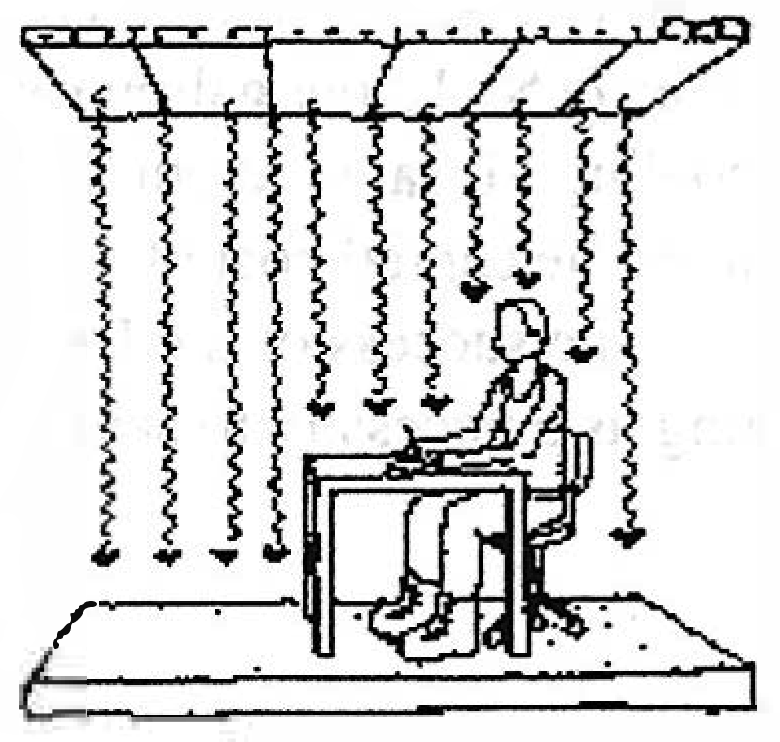
Small, high-temperature infrared heat sources with focusing reflectors are highly effective if installed so as not to cast shadows. They are especially useful where high air temperatures cannot be maintained, as in large industrial buildings or even outdoors, where they can produce heat instantaneously when it is needed and beam it precisely to where it is needed (9.8). Open .fires and stoves are less efficient radiant heat sources because of their omnidirectional, inverse-square radiation and because of the relatively large amount of fuel that they convert to warm air rather than radiant energy. Because of its thermal similarity to solar radiation, infrared heat from either low- or high-temperature sources feels very pleasant on the bare skin. Swimming pools, shower rooms, and bathrooms are particularly appropriate locations for such systems.
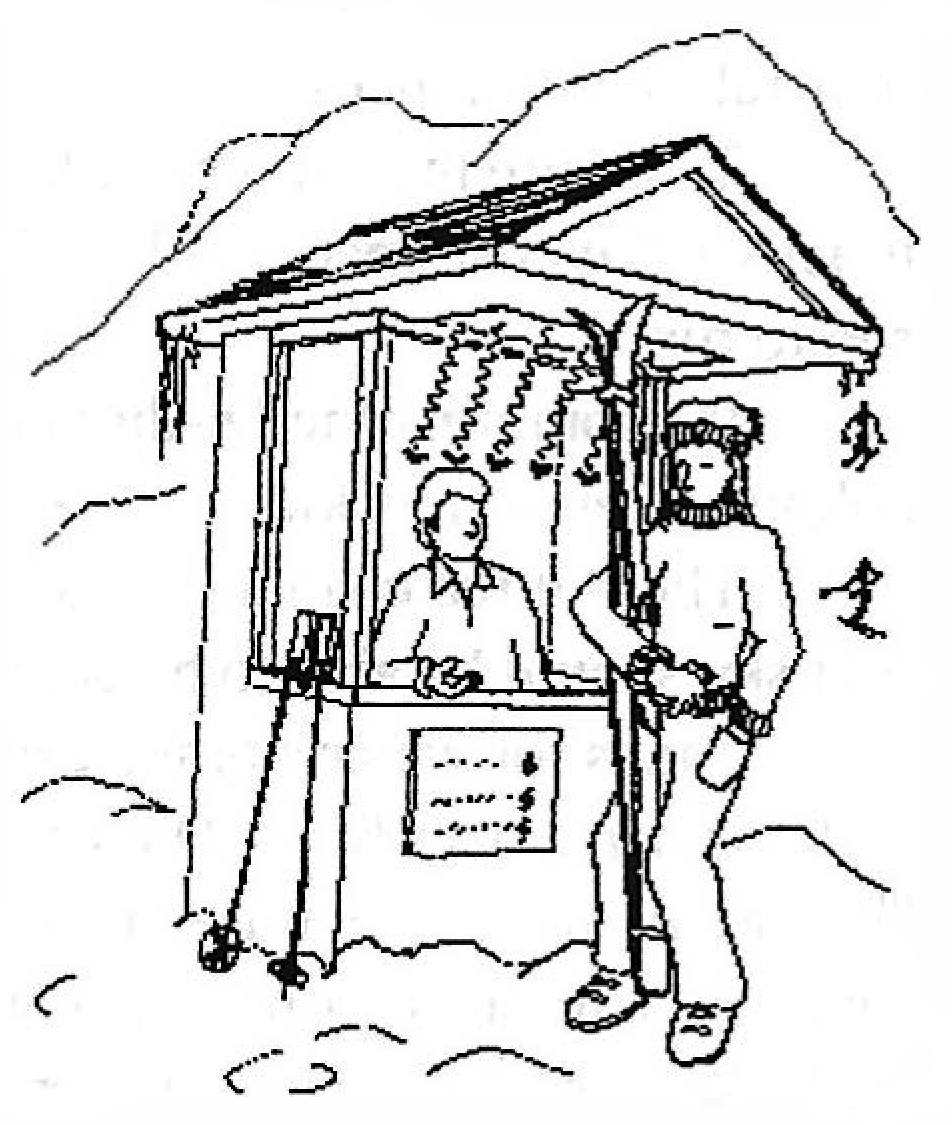
Our means for lowering the mean radiant temperature of an interior location are somewhat more restricted than our means for raising it. We cannot, for example, cool our bodies by exposing them to a small surface at a very low temperature. Whereas we can easily heat an electric filament or gas flame to a temperature a thousand or more degrees above body temperature, there are only a few hundred degrees with which to work between body temperature and absolute zero, and devices for producing very low temperatures are expensive to build and operate. Furthermore, a very cold surface quickly frosts over with moisture condensed from the air, thereby losing most of its effectiveness because of the insulating properties of the frost. Even a moderately cold surface becomes moist and unpleasant in warm summer weather; which is - why we do not actively cool floors and ceilings except in rare cases when we can control the humidity at a level low enough to eliminate condensation. What we can do instead is to shade roofs, walls, and windows against the summer sun, surface them on the exterior with highly reflective coatings whenever practical, insulate them well, and provide enough thermal capacity in the interior surfaces of the building to ensure the maintenance of cool temperatures throughout the day. We can also, in some cases, open a building to the night sky, allowing our bodies and the warm surfaces of the building to radiate heat into space.
Our prototype building combines radiator and storage overhead and controls radiant flux by means of overhead shutters. This is inexpensive and effective yet it is so different people may not accept it in many kinds of buildings. In this case we intend to use blow-molded mats in the ceiling, pumping warm or cool water through from storage tanks as desired.
In many climates a Di-thermal roof can save 40,000 to 100,000 BTUs per square foot per year in heat. Compared to $.10 per kWh electric heating. This would save $1.20 to $3.00 per square foot per year. (With propane @ $1.10 per gallon savings are 50% as great.) During the cooling season the Di-thermal roof does all the cooling. It saves about 2 kWh per square foot per year or $.20 per square foot per year and more important replaces the capital cost of a compressor.
The success of the Di-thermal roof will likely depend on marketing the luxury of radiant heating and cooling as a necessity to save energy.
PDF Version: 2002-01-01-dithermal-roofs.pdf